Meghalaya in 7 Days- Itinerary, Must Try Experiences & What to avoid

Meghalaya Trip for 7 Days

A Journey Through Mists, Myths & Matriarchy

Truth be told, I did try to plan this trip with precision. But lately, I’ve come to realise that an itinerary, when embarked upon, takes a life of its own. So its best to just go with the flow and leave the rest in the hands of the Travel Gods.

I didn’t know much about Meghalaya, just that it was green, mysterious, and calling. So when a friend floated the idea, I said yes without blinking. The kind of yes that comes from deep within you. Like a kid being offered a golden ticket to the chocolate factory.

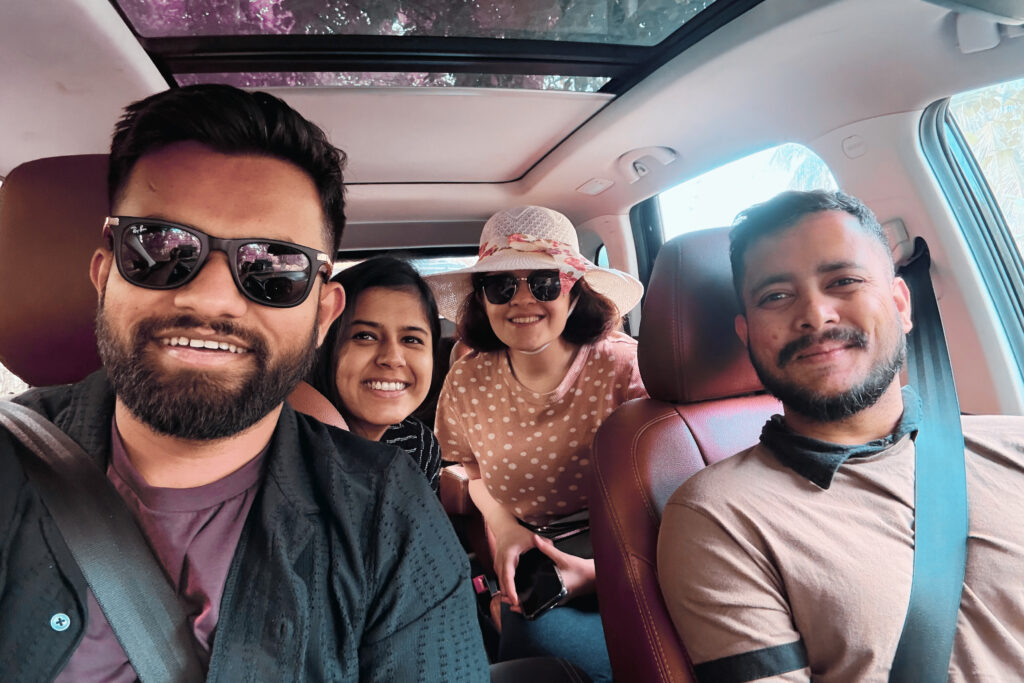
And just like that, the four of us boarded a flight from Delhi to Guwahati—wide-eyed, restless, and ready to swap city chaos for misty hills and winding trails. We had no clue what lay ahead, but we were certain of one thing: we were going to make it unforgettable.

And oh, we did.

7 days in Assam & Meghalaya

Day 1: Safari at Kaziranga

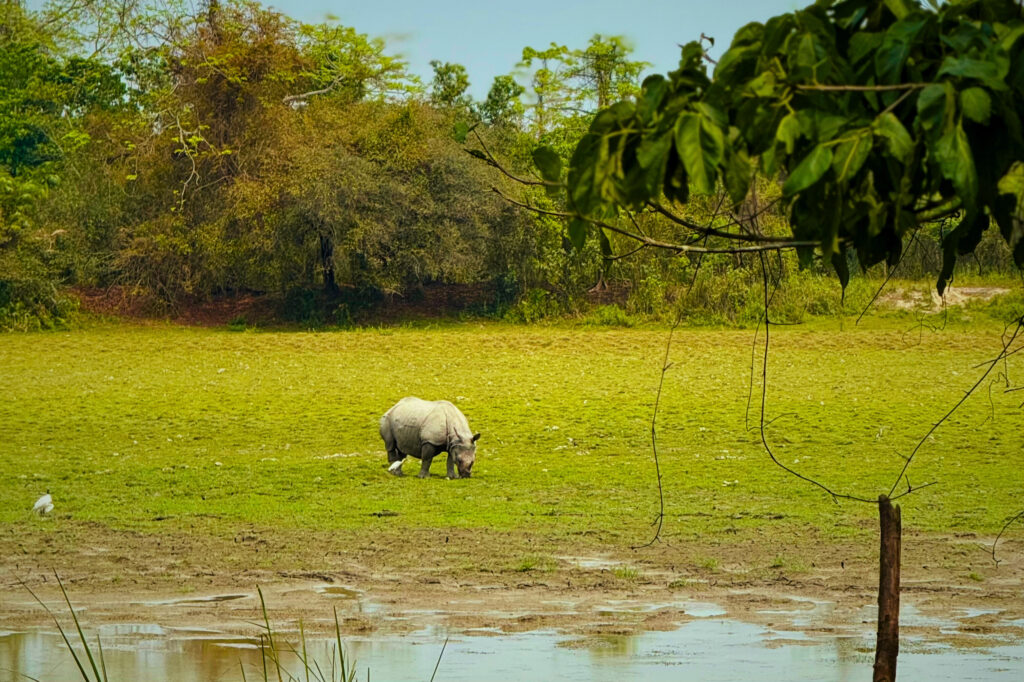
Safari at Kaziranga National Park

We landed in Guwahati just as the afternoon sun dipped and drove straight toward Kaziranga National Park, stopping briefly for lunch before the journey. We stayed at Green Paradise Hotel & Resort, located just 350 metres from the Western Zone gate and about 4–5 km from the Central Zone (the most popular entry). The resort was quiet, green, and practical—private cottage-style rooms, friendly staff, and decent food that did the job.

The real magic began at dawn.

With safari bookings done in advance via kazirangapark.com (highly recommend), we entered the park by 8:30 AM. Almost immediately, we spotted herds of deer weaving through tall grass, followed by the undeniable stars of Kaziranga—the majestic one-horned rhinos, grazing freely in their natural habitat. Along the way, we saw monkeys perched on bare trees, monitor lizards, a sunbathing python, and a stunning variety of birds.

The one-hour jeep safari felt surreal, a mix of adrenaline and calm, like stepping into a real-life nature documentary. We returned to the resort exhilarated, hungry, and sun-kissed, just in time for breakfast and check-out.

Next stop: deeper into the clouds. ☁️

Day 2: Exploring Shillong

Shillong greeted us with cool mountain air, soft jazz drifting from cafés, and a quiet charm that felt instantly familiar yet magical. The drive from Guwahati to Shillong took about three hours. If you arrive before 4:30 PM, a stop at Umiam Lake is a must—the sunset turns the water gold. We reached closer to 6 PM, well past sunset, a reminder that evenings arrive early in the Northeast and most places shut by 9–9:30 PM.

We checked into our Airbnb—a cozy, well-furnished 2BHK with a private balcony and modern amenities. Our host, who lived nearby, was warm, chatty, and generous with local insights, quickly giving us a deeper understanding of life in Shillong.

One of the biggest takeaways: the cost of living in Shillong is surprisingly high. Slower development, limited supply chains, and logistical challenges mean everyday essentials can be scarce and expensive. Fresh milk, for instance, isn’t always readily available and often costs extra, while vegetables can be inconsistent.

Food habits here lean heavily toward meat-based diets, so vegetarians need to be a little intentional about where they eat. That said, good vegetarian options do exist—and I’ll be sharing my tried-and-tested recommendations here.

Day 3: Night Stay in Cherrapunji (not recommended)

After a warm breakfast at our Airbnb, we checked out of Shillong—reluctantly—before hitting the road toward Cherrapunji. The Shillong to Cherrapunji drive is scenic and best enjoyed with a few planned stops along the way.

Our first stop was Elephant Falls, one of the most popular waterfalls near Shillong. Entry tickets cost around ₹50, so carrying cash is helpful. The falls are easy to locate via Google Maps, followed by a short descent of about 100 steps to the viewpoint. Even in April, when the water flow is lighter, the three-tiered waterfall is beautiful, with mist hanging in the air and water cascading over moss-covered rocks. After a quick photo break (and a slightly breathless climb back up), we continued our journey.

Next stop: Nohkalikai Falls, one of the tallest waterfalls in India.

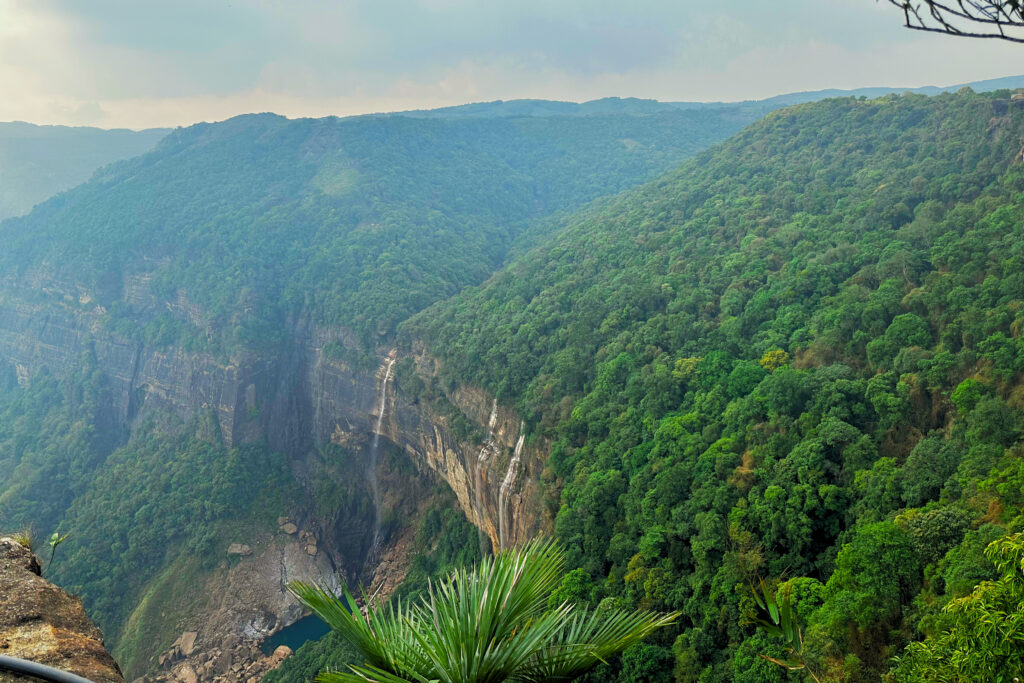
Nohkalikai Falls

From a distance, Nohkalikai Falls looks breathtaking—the tallest plunge waterfall in India, dropping dramatically into an aqua-blue pool. But what lingers longer than the view is the legend behind it. Local folklore tells the tragic story of Likai, a woman driven to madness after discovering her husband had killed and cooked her child. Overcome with grief, she leapt from the cliff—Noh-ka-Likai literally meaning “the leap of Likai.” Standing there, wind howling around us, the place felt heavy, as if it remembered.

With dusk closing in, we skipped Seven Sisters Falls, nearly dry, according to fellow travellers, and focused on reaching Cherrapunji before dark. Meghalaya, however, had other plans. Thick fog rolled in, rain tapped briefly against our windshield, and visibility dropped to almost nothing. The forest closed around us, trees looming like silhouettes, the road disappearing and reappearing in flashes. It felt surreal—equal parts dream and nightmare.

We reached our Airbnb hoping for relief, but unease followed us indoors. While the cottage looked charming from the outside, the stay itself was uncomfortable: high humidity, no ceiling fans, weak Wi-Fi, poor water supply, and just one bathroom for four people. The host was distant, and with barely any mobile network, the silence felt unsettling rather than peaceful.

That night, every sound felt amplified. Sleep came in fragments. By dawn, the decision was clear. We packed up and left nearly a day earlier than planned.

Our honest advice: avoid staying overnight in Cherrapunji. Accommodation options are limited, overpriced, and often don’t match expectations.

Day 4: Skip Dawki and Visit Mawlynnong Village

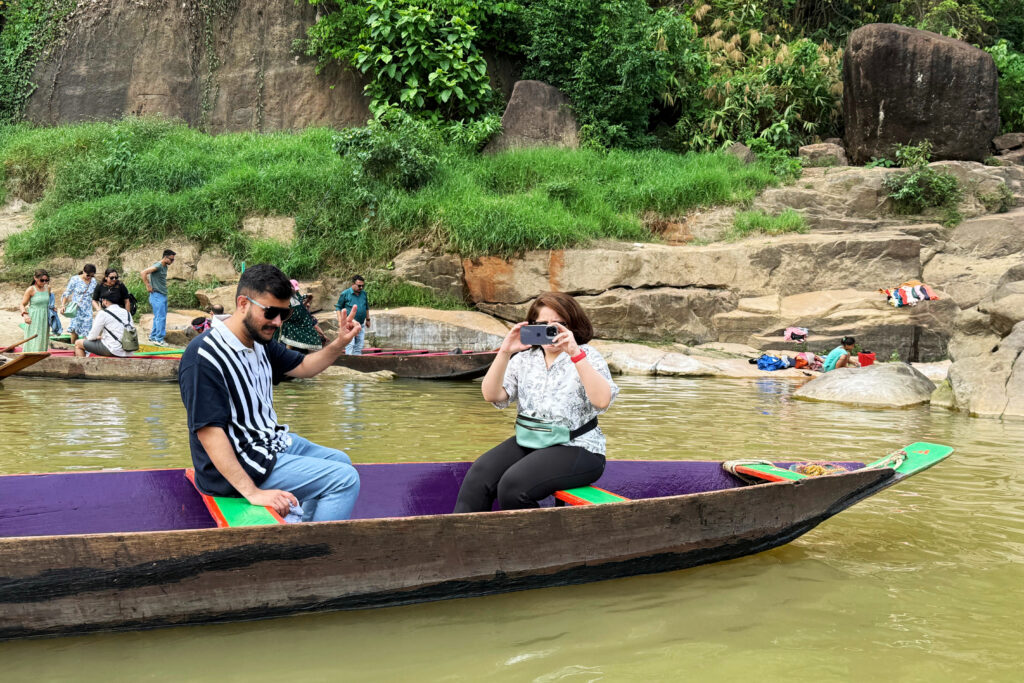
Dawki River

Skip Dawki. It's not worth it.

After a restless night in Cherrapunji, we were craving a reset—something serene, refreshing, and undeniably photogenic. Dawki seemed like the obvious choice, famous for its crystal-clear river and postcard-perfect views.

Except… reality disagreed.

After a few wrong turns (patchy network doesn’t help), we finally reached Dawki to find murky brown water instead of the iconic emerald blue. No clarity, no sparkle—just harsh sunlight and very average views. Since we were already there, we took the boat ride anyway: ₹800 for 30 minutes on water that looked more like lukewarm chai. Seeing the Bangladesh border up close was mildly interesting, but not enough to save the experience.

Verdict: if you’re planning a Meghalaya trip, skip Dawki—especially in April. The viral “clear water” views are highly seasonal and far from guaranteed.

Asia's cleanest Mawlynnong Village

Visit Mawlynnong Village

Still hopeful, we headed to Mawlynnong, often called the cleanest village in Asia. Expectations were cautious; we needed a win. We arrived around 4 PM, just as heavy rain poured down, Cherrapunji-style. Sheltering in a small roadside shack, we revived ourselves with hot Maggi, momos, and fiery red chutney while waiting out the rain.

When it refused to stop, we improvised. Ponchos on, shoes off, we walked barefoot into Mawlynnong, and instantly felt lighter.

The village was calm, intentional, and quietly beautiful. Neatly maintained gardens, bamboo dustbins, cobbled paths, and flowers in full bloom gave it a thoughtful, almost poetic charm. No drama. No spectacle. Just peace. We wandered slowly, rain tapping on leaves, clicking photos not for Instagram, but to remember the stillness.

Recharged and finally at ease, we returned to Shillong, ready to end the day with the comfort of a proper hotel and a good meal.

Day 5: Must Visit Laitlum Canyon and Umiam Lake

With our earlier Airbnb unavailable, we decided to check into a hotel in Shillong—and it turned out to be the reset we desperately needed. Centrally located, the hotel offered a quick check-in, cozy rooms, crisp sheets, and the simple luxury of a hot shower and clean pajamas. Instant relief.

After days of quick bites and packet meals, we finally sat down to a proper dinner—comforting, no-fuss food that hit exactly where it needed to. Later that night, we quietly celebrated my husband’s birthday with cake before drifting into deep, uninterrupted sleep, softened by Shillong’s steady rain.

Morning arrived wrapped in mist. Grey skies, light drizzle, and a peaceful breakfast overlooking rolling hills made for a slow, perfect start. With no rush on the agenda, we planned just two stops for the day.

Laitlum Canyon

Laitlum Canyon

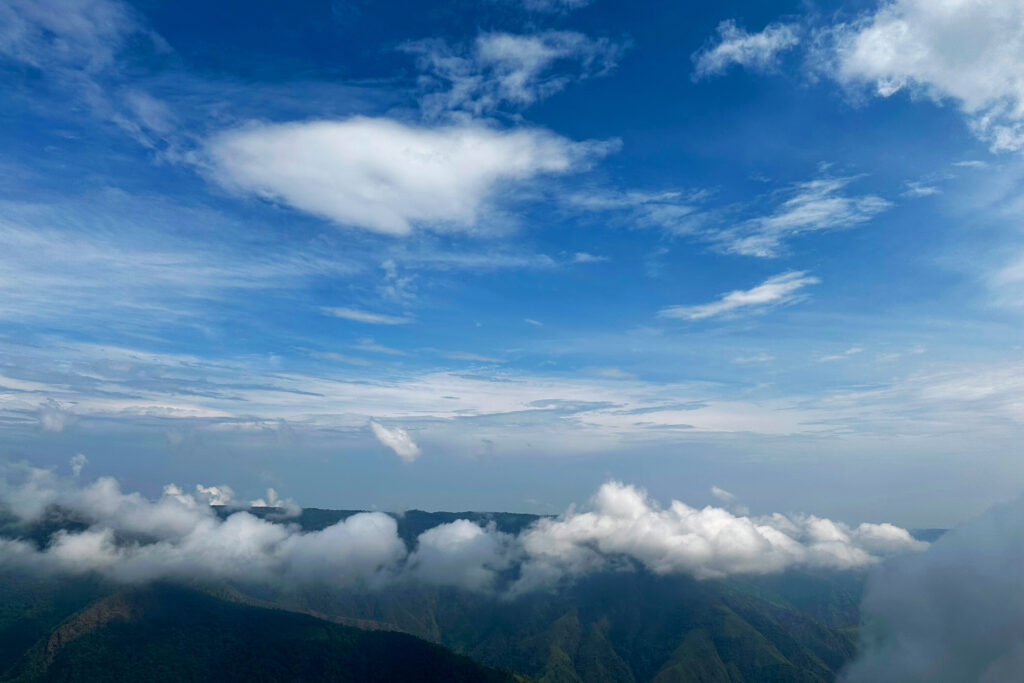
First up was Laitlum Canyon, a short drive away and one of the most breathtaking viewpoints near Shillong. Sheer cliffs dropped into cloud-filled valleys, the wind cut through sharply, and the silence felt almost sacred. No crowds, no barriers—just raw, expansive nature. We spent nearly two hours there, wandering, taking photos, and sharing Maggi with the clouds.

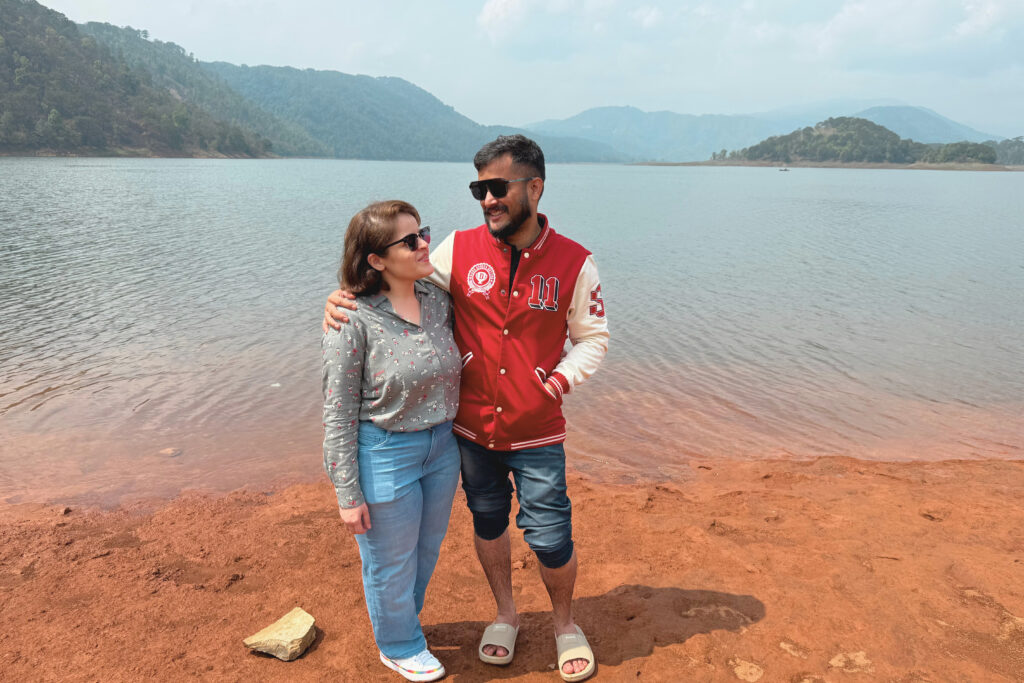
Umiam Lake, Shillong

Umiam Lake

Our final stop was Umiam Lake, a place as poetic as its name. The water shimmered gentley as the sun bragn its descent, the air cooled with a promise of dusk, and all around was calm. Not silence, but serenity, the kind that fills rather than empties.

As the light faded and the sky blushed, we made our way to our final stay: a quaint little Airbnb, tucked far from the city’s bustle, cradled by trees and soft quiet. 

Day 6: Shillong Culture & Places to Explore

I woke up early, as usual, and stepped outside with a friend while the rest of the house slept. The morning air was cool and quiet, and we were greeted by the cook, who had arrived to prepare breakfast—warm, curious, and happy to chat.

Our conversation soon turned to life in Meghalaya, and she spoke about the region’s tribes, customs, and one defining difference: its matrilineal society. Here, women inherit property and often lead financially, while men manage the household. After marriage, the husband moves in with the wife’s family, and lineage is traced through the mother. It was subtle, matter-of-fact—and quietly radical.

Suddenly, everything made sense. Across cafés, markets, petrol pumps, and roadside stalls, women were everywhere—working, leading, running things. There was no spectacle of empowerment, just a calm, unquestioned presence. A matriarchy woven seamlessly into everyday life.

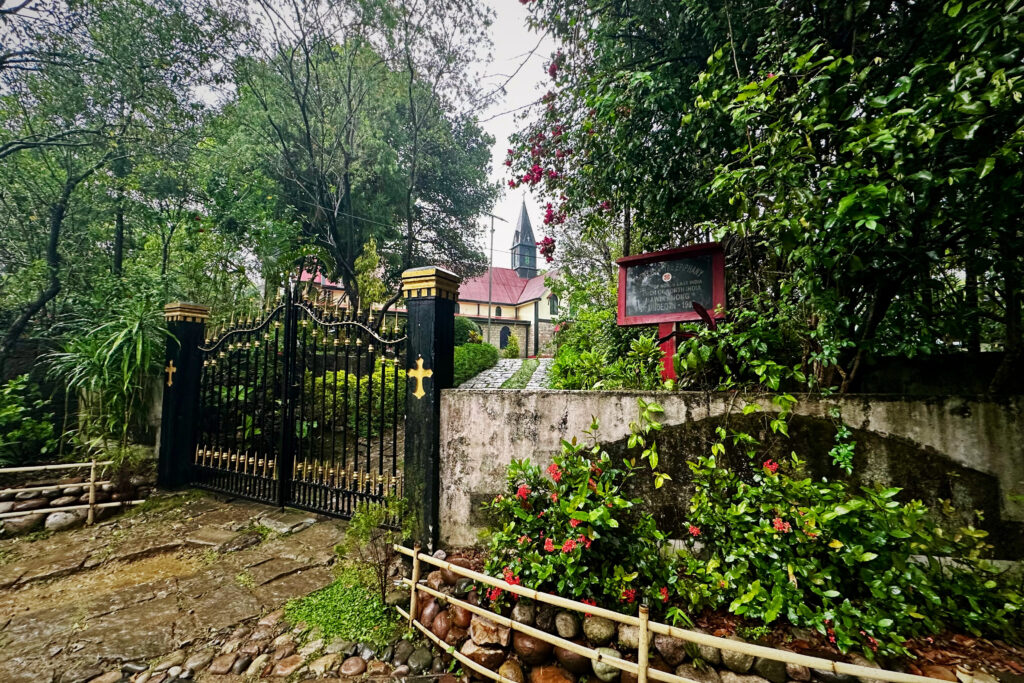
Breakfast was simple—potato sandwiches and chai—and we lingered longer than planned, letting the morning settle. Later, we stepped out for one final exploration of Shillong: a quiet old church, a walk through Police Bazaar (skippable, honestly), and a few last café stops.

And just like that, our Meghalaya trip came to an end—leaving us more curious, more grounded, and deeply inspired by a place where women don’t ask for space; they simply inhabit it.

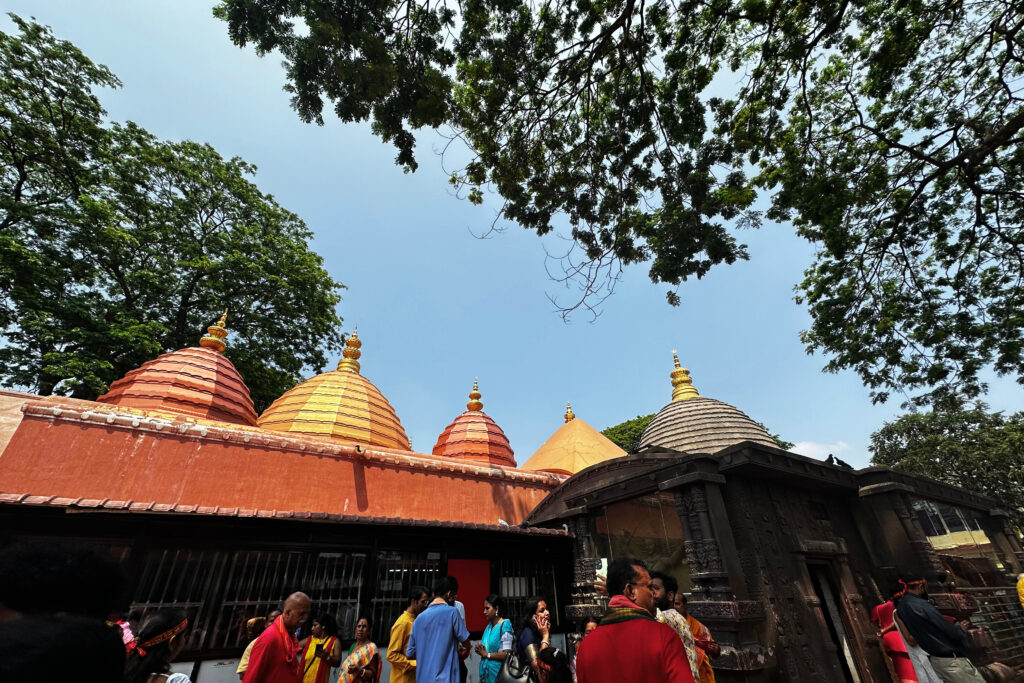
Day 7: To the Abode of Maa Kamkhya Devi

Kamkhya Devi Temple

Our final day in Meghalaya began early. With an afternoon flight to Delhi, we packed up quickly and drove toward Guwahati for one last stop—the Kamakhya Devi Temple.

We arrived just in time, straight into chaos. Parking was a struggle, hawkers crowded the entrance, and devotion came with price tags attached. When we enquired about darshan, we were told the general queue would take 10–12 hours—impossible with a flight to catch. The only option was a VIP pass: ₹500 per person for a rushed 15-minute entry. Reluctantly, we took it.

The experience felt transactional. Narrow corridors, hurried instructions, a brief glimpse of the sanctum—and we were ushered out almost as quickly as we entered. While we offered our prayers sincerely, the spiritual connection felt diluted, buried under logistics and urgency.

Barefoot and rushed, we made our way back to the car and headed for the airport. As the road stretched ahead, a quiet stillness settled in.

Meghalaya had given us beauty, discomfort, wonder, and reflection in equal measure. It reminded us that travel doesn’t always give you what you expect—but often, what you need. And sometimes, what you carry home isn’t souvenirs or photos, but small truths about the world and your place within it.


Meghalaya Trip FAQs

🗓 Best Time to Visit: October to February (post-monsoon magic, clearer skies)
🧭 How to Reach: Fly to Guwahati → Drive to Shillong (3 hrs)
🧳 Pack: Rain gear, solid shoes, warm layers, offline maps

🍀Food Recommendations (for vegetarians):

  1. Healthy bitez – Guwahati (just 400 meters from Guwahati airport)
  2. Dylan’s cafe – Shillong (must try their lasagna)
  3. The Heritage Club, Tripura Castle- The Stable Bar- Shillong
  4. Orange Roots- Cherrapunji (must try their chole bhature)
  5. Bistro Vegetarian – Shillong (we ordered from here via Zomato)
 

🛌 Where we Stayed:

  1. Green Paradise Hotel & Resort- Kaziranga (has decent food with homely taste)
  2. Grace of God Serviced Apartment- Shillong (cannot recommend this enough)
  3. Janeria- A Boutique Hotel- Shillong (a very comfortable stay)
  4. Roots Hideaway- Cherrapunji (not recommended)
  5. Ri Saw Kun homestay (pinteresty stay with a great cook)
 

💡Tips:

  1. Hire a car only if you are a seasoned driver or else opt for a driver with the car
  2. Most of your time will be spent on roads, best to keep some snacks
  3. All the tourist spots have a minimal entry free of ~INR 50, keep some cash
  4. Food isn’t that great so stick to the above recommendations if you’re a vegetarian 
  5. Would recommend to travel in groups as some of these places can get secluded

Final Word:

If Meghalaya is on your list then go. But go with an open mind. Let the mist wrap around you. Let the stories seep in. And when you come back, tell me what stayed with you.

I’ll trade you one of mine 😉